Every vehicle, on one map that is actually yours.
Live positions from your open-data feed, snapped to the real road network and filterable by operator. The display runs on infrastructure you host, not a dashboard you rent.
A live fleet view you own end to end.
The live-transit layer below is running on the public London and Manhattan demos right now: real feeds, real streets, on a stack you can host yourself.
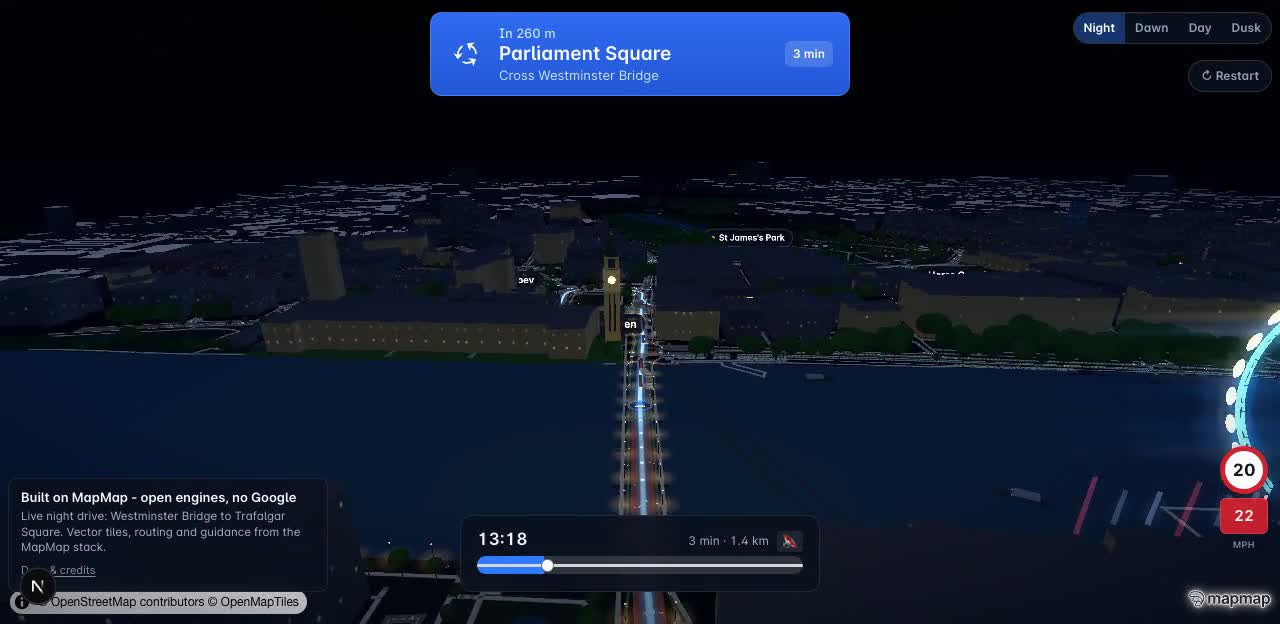
Every vehicle, where it actually is
Positions come from open bus-data feeds, DfT Bus Open Data in London and MTA BusTime in New York, snapped to the road network so a bus reads as on the street, not over rooftops.
See live buses on the globe →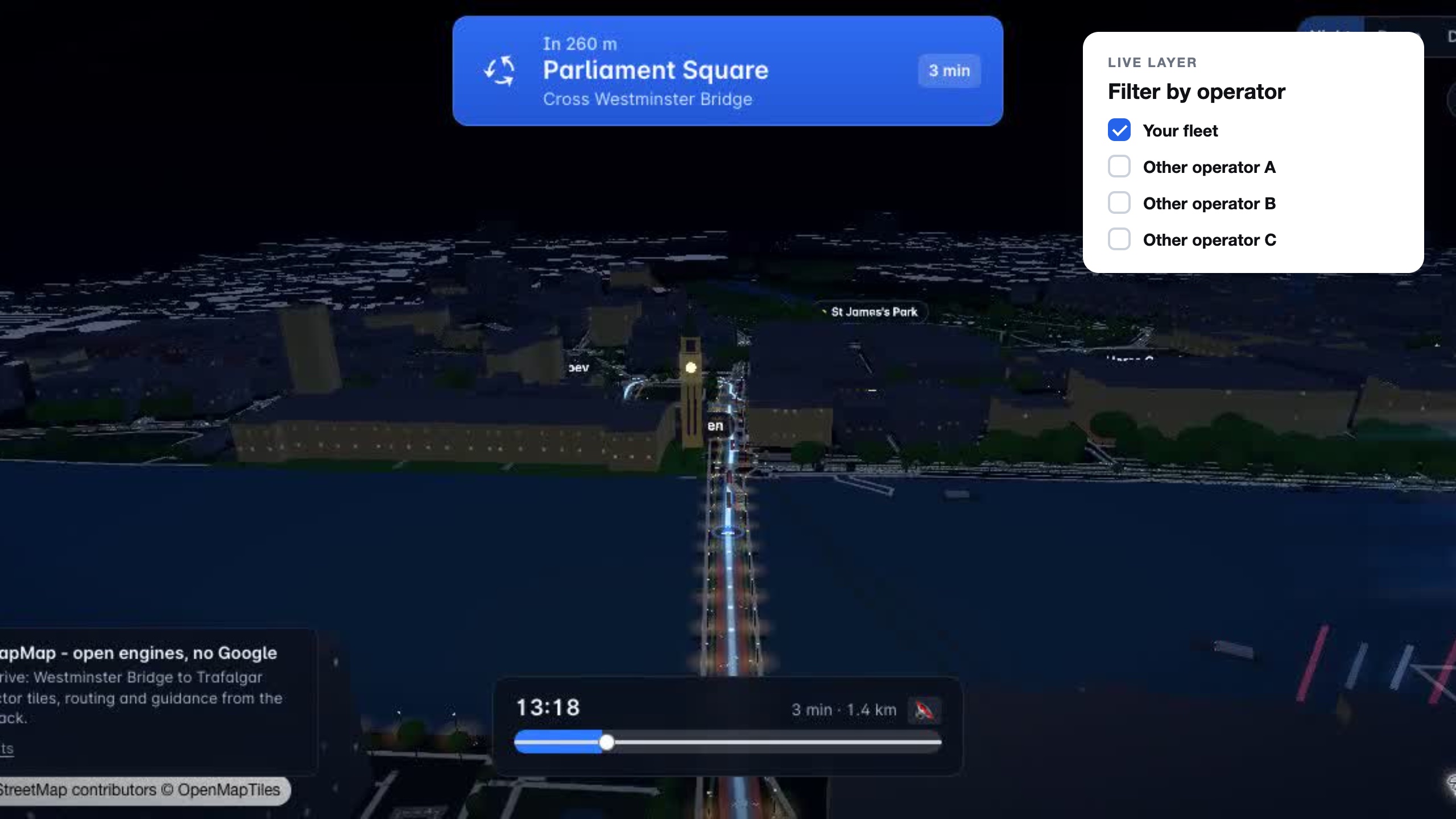
Filter to your own fleet
The live layer filters by operator, so your ops team watches its own vehicles inside a citywide feed.
Ask for the control-room walkthrough
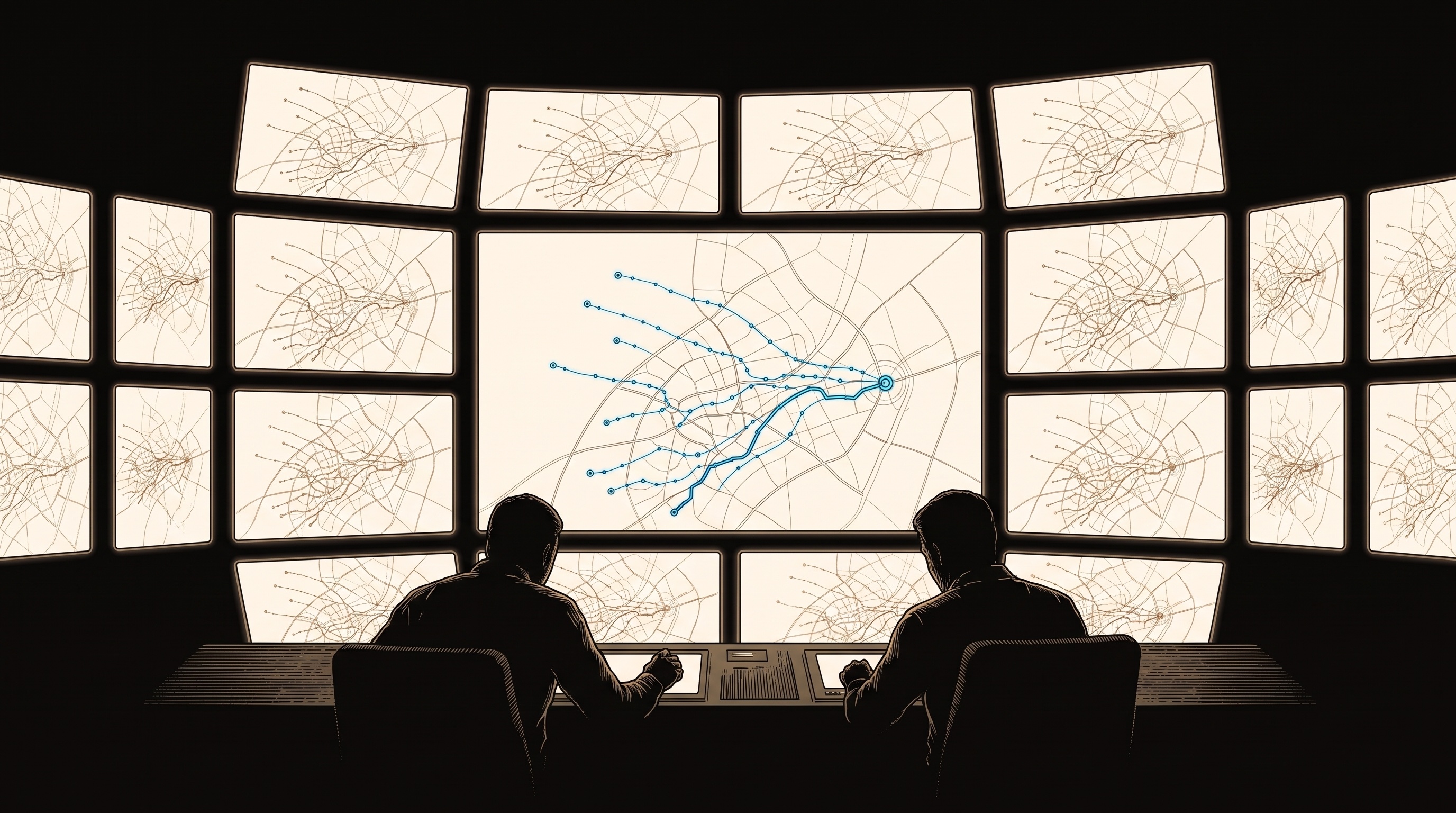
We run a live control room over thousands of London buses in sales conversations: real positions, real operator filtering, on a map we host. Not a public link, on purpose.
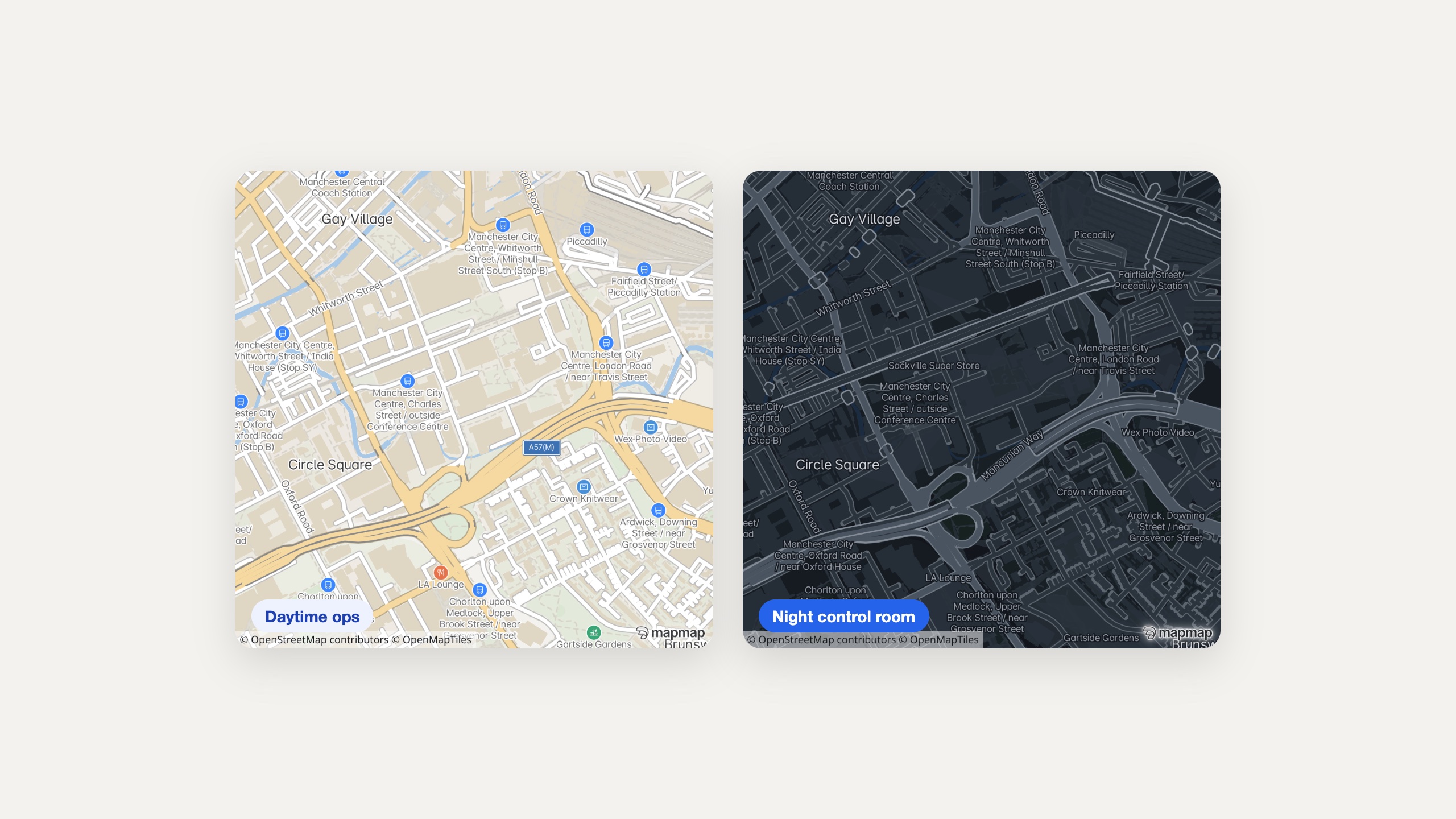
Styled in Studio, not hard-coded
The whole scene restyles from a hosted style document: palette, building tones, light presets. Brand the ops view per depot or per contract without touching client code.
The ops view runs on your infrastructure
Docker distribution, no per-seat dashboard fee, no vendor holding your control room hostage on renewal. If the feed is yours, the map should be too.
A pack your IT team can approve
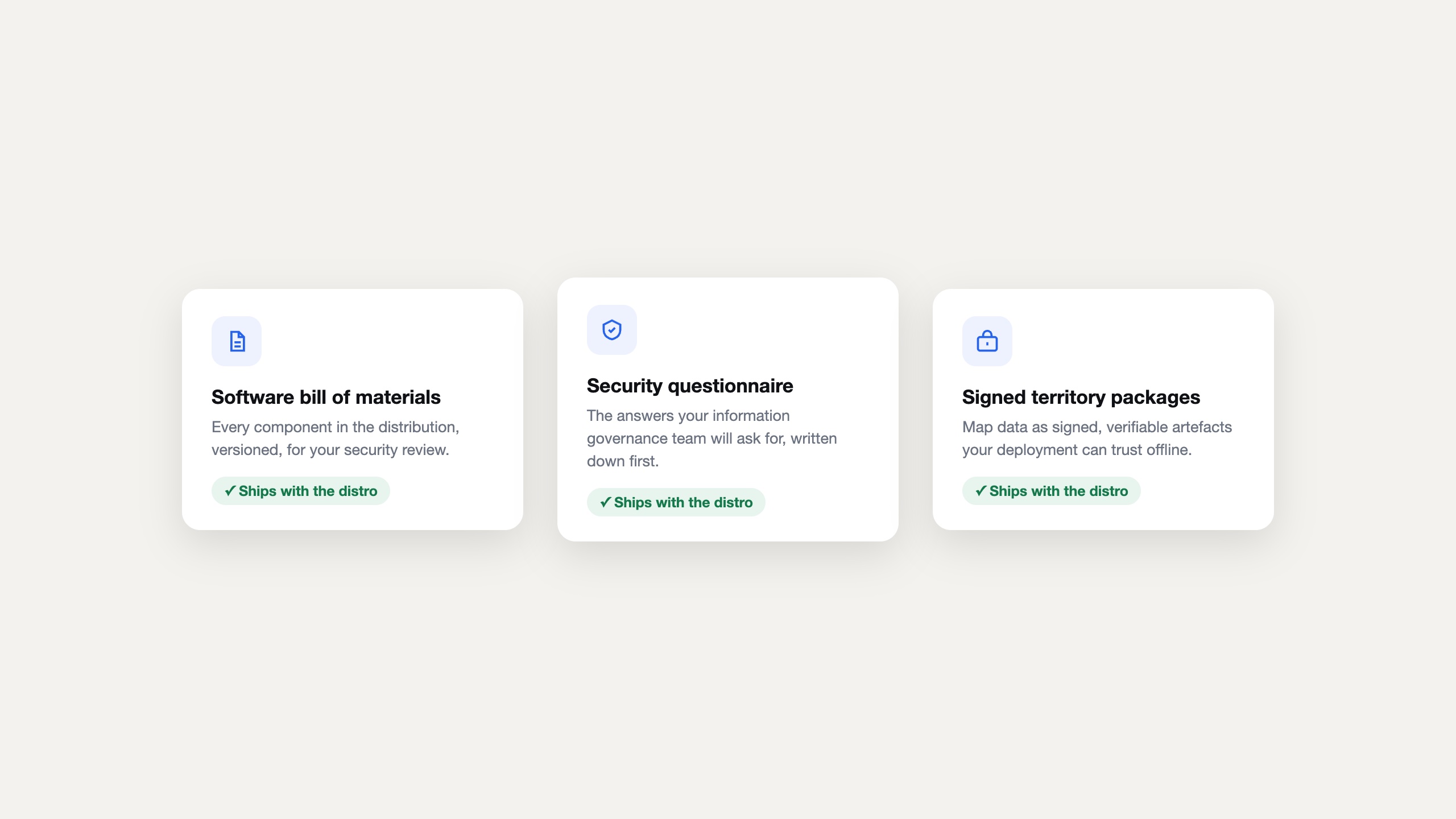
A procurement pack ships with the distribution: SBOM, security questionnaire, signed territory packages. Your information governance team's questions have written answers already.
National live-bus API
England's local buses as the open Bus Open Data feed reports them, for any box up to 4 square degrees, as GeoJSON with the feed's freshness on every answer. A stale feed is labelled, never blanked. Live positions for display, never arrival predictions.
GET /v1/transit/vehicles →This is display, not routing. Live positions come from open feeds and are drawn where the feed says; the platform does not compute public-transport journey times, PTAL scores, timetable-based trip routing or arrival predictions.
Point us at your vehicle feed.
You get a branded live map of the fleet, self-hosted on your own infrastructure, built by our AI agents against the real feed.
What you are actually being offered.
On the page, not in the small print: the scope, the deliverable, the timetable and how the money works, before you spend an hour on a call finding out.
- Who it is for
- An operator or authority that has a vehicle feed and no map of its own to put it on.
- What is in scope
- You point us at the feed. We build the branded live map on it, self-hosted, and agree which of your own layers belong on it.
- What you get
- A branded live map of the fleet running on your infrastructure, built against the real feed rather than a sample, and the source with it.
- How long
- Days rather than months once the feed is reachable. Feed access is usually the long pole.
- What it costs
- Scoped on the call. Self-host licences are published on the pricing page.
- Next step
- Point us at the feed, even a read-only test one, and we will put your vehicles on your own map.
Automotive
MapMap in the vehicle: a full navigation stack you host and control.
Trucking & Logistics
The router that refuses the bridges the map records, before your driver sees them, with dispatch-grade optimisation built in.
Fleet Optimisation & Dispatch
Plan the whole shift against skills, windows, capacities and rest, then follow it without handing anyone your drivers' positions.